Building a business requires drive. Sustaining it requires a different kind of leadership.
One that builds ownership, strengthens accountability, and reduces dependence on the founder.
I work with founders to address the people issues that start showing up when business grows.
As things get more complex responsibility should spread, but in smaller businesses it often doesn’t happen naturally.
Not because your team isn’t capable, but because accountability hasn’t quite settled into the right places... yet.
And when that happens, it doesn’t break loudly.
It shows up in small ways - follow-up lingering, things taking longer than they should, and eventually, decisions defaulting to you.
That’s where I come in.

Decisions that move without you, ownership that sticks,
so your involvement remains deliberate rather than automatic.
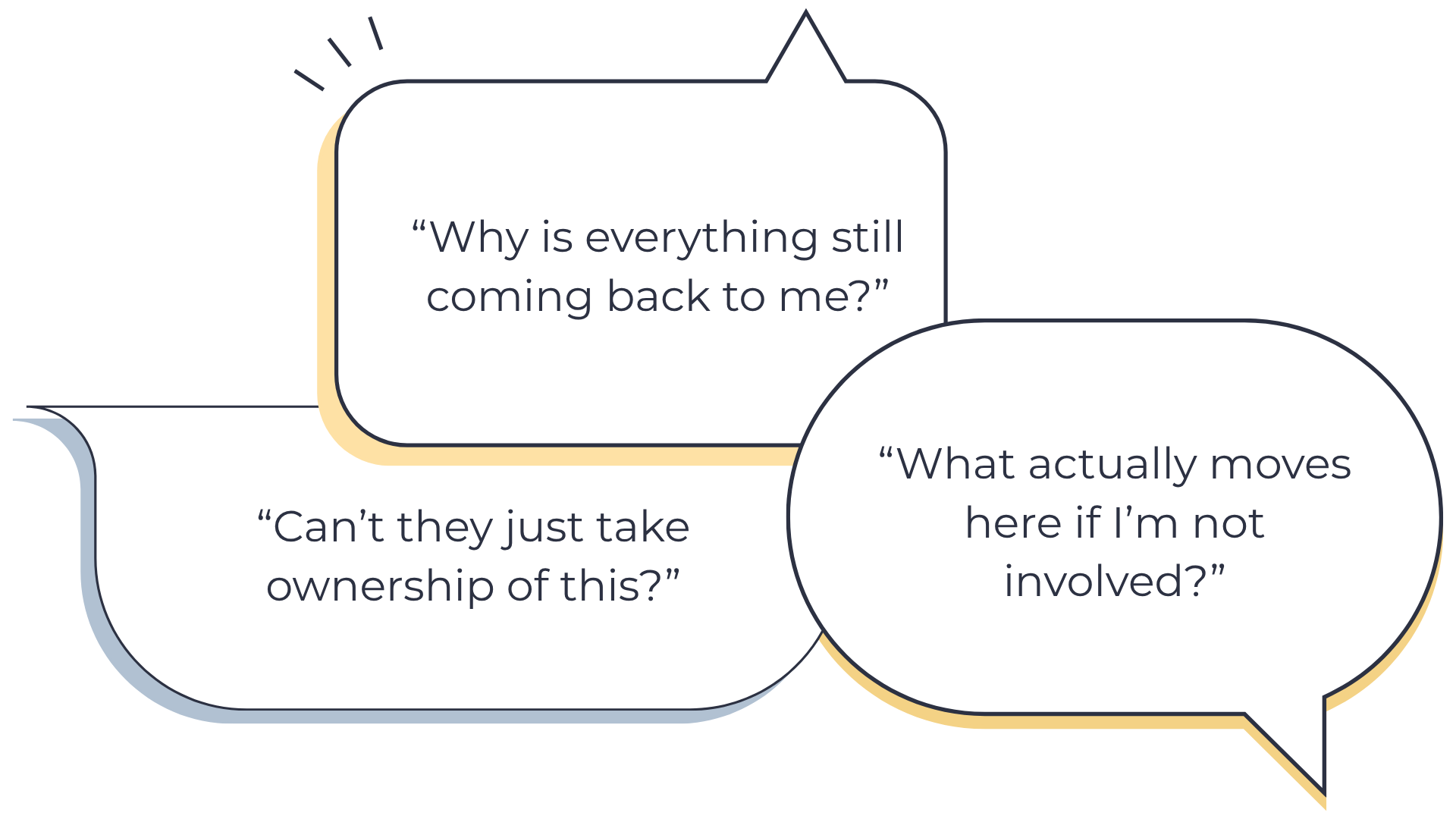
As responsibility spreads, it’s easy to remain involved more than necessary, decisions, follow-ups, and things that shouldn’t be on your plate never seem to go away.
Not because you’re holding on too tightly, but because things still find their way back to you.
I help you create space again, without losing standards or control, so that the right decisions stay with you, and responsibility stays where
it should.
Without traditional hierarchies, ownership can become unclear, confidence drops, decisions weaken, and you end up as the final authority more often than you should.
And over time, that doesn’t just slow things down.
It quietly shapes how people show up.
I help you strengthen how responsibility is actually carried in your team, so you’re not left holding everything yourself.
Without clear expectations, people aren’t always sure what “good” looks like; ownership slips, follow-through becomes inconsistent, and you’re left chasing things up.
And when expectations stay implied, people adjust, potentially in the
wrong direction.
Carefully, I help you sharpen how expectations are set and followed through on, so performance strengthens and the business can grow with more consistency.
Different situations require different levels of intervention.
Not more effort, a different kind of work.
My work draws on structured accountability thinking, including the AccountabiliTree™ approach, but is always shaped to your business and how things actually operate.
The aim is simple:
Make accountability clear.
Make ownership hold.
And reduce how much still depends
on you, often more than it needs to.
I work with you and your team directly, through coaching, focused conversations, and targeted development, to strengthen how accountability is actually carried day to day.
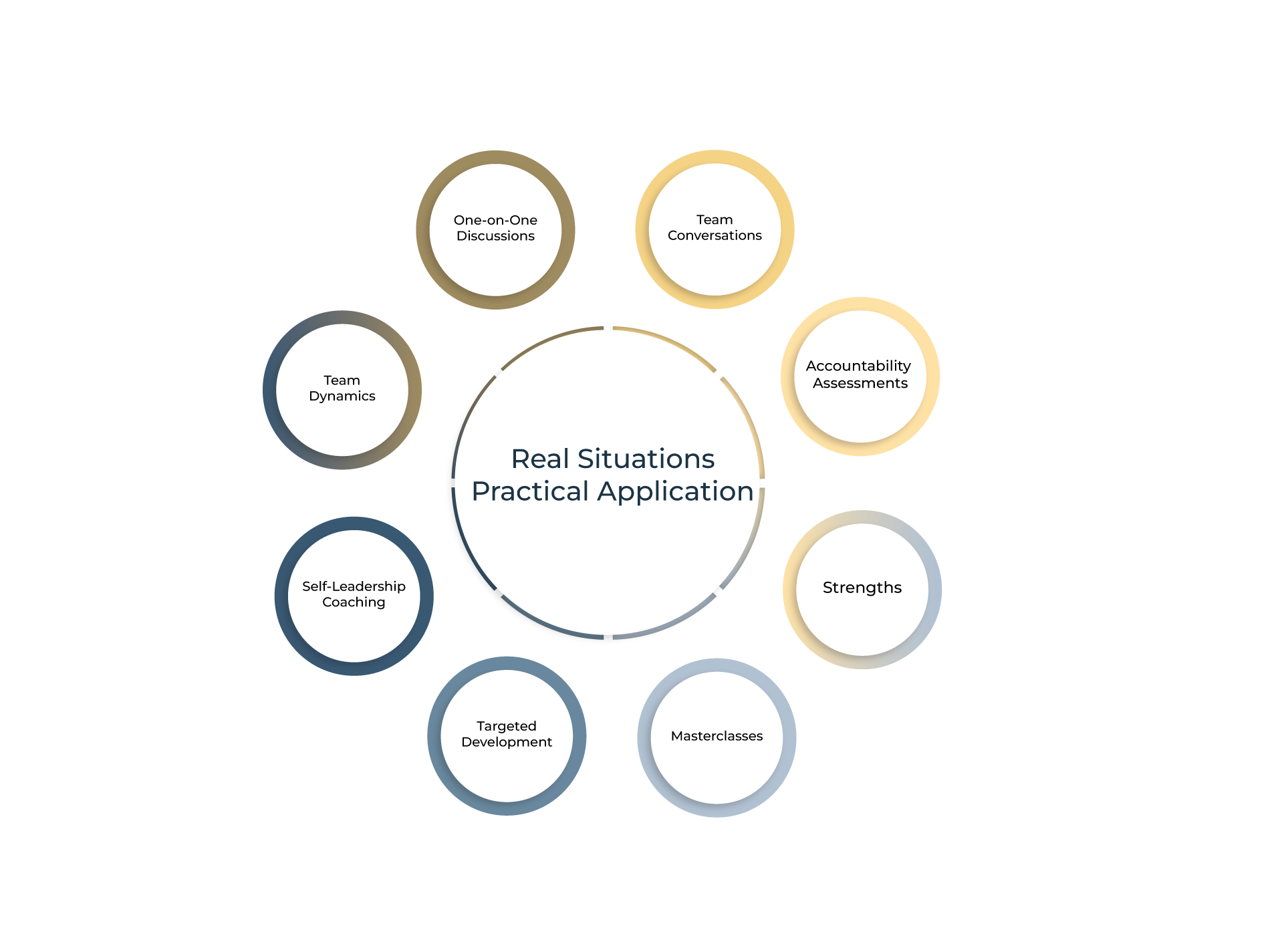
Together we work on real situations, not theory. That might mean working with you one-on-one, developing your team’s ability to take ownership, or shifting how expectations, decisions, and follow-through are handled in practice.
Because most accountability issues don’t sit in frameworks. They sit in how things are actually playing out.
My work draws on structured accountability thinking, including the AccountabiliTree™ approach, but is always shaped to your business and how things actually operate.
The aim is simple:
Make accountability clear.
Make ownership hold.
And reduce how much still depends
on you, often more than it needs to.
I work with you and your team directly, through coaching, focused conversations, and targeted development, to strengthen how accountability is actually carried day to day.
Together we work on real situations, not theory. That might mean working with you one-on-one, developing your team’s ability to take ownership, or shifting how expectations, decisions, and follow-through are handled in practice.
Because most accountability issues don’t sit in frameworks. They sit in how things are actually playing out.

It is about refining how responsibility is carried.
When decision flow becomes disciplined:
• Escalation becomes intentional
• Ownership steadies
• Standards are held confidently
• Capacity returns
Control is not reduced.
It becomes purposeful.
And often… lighter than before.
I work with leaders navigating growth, increasing responsibility, and structural complexity.
My approach is steady, direct, and grounded in real leadership and accountability dynamics.
I work with what is already happening day to day, how decisions are made, where things slow down, and what keeps coming back to you, so it can be addressed where it actually matters.
My work draws on structured accountability frameworks developed through years of practice including the AccountabiliTree™ model.
Let’s have a conversation.
One focused discussion can surface patterns that quietly shape everything else —
often the ones that don’t get named, but are felt.
My work draws on structured accountability thinking, including the AccountabiliTree™ approach, but is always shaped to your business and how things actually operate.
The aim is simple:
Make accountability clear.
Make ownership hold.
And reduce how much still depends
on you, often more than it needs to.
I work with you and your team directly, through coaching, focused conversations, and targeted development, to strengthen how accountability is actually carried day to day.
Together we work on real situations, not theory. That might mean working with you one-on-one, developing your team’s ability to take ownership, or shifting how expectations, decisions, and follow-through are handled in practice.
Because most accountability issues don’t sit in frameworks. They sit in how things are actually playing out.
AccountabiliTree™ is a framework for building accountability in a founder-led business. It treats accountability the way you would treat a tree: what you notice in the leaves, the visible problems, the things falling through, the sense that too much still runs through you, starts much lower down, in the roots and the soil. So rather than blaming the last person who dropped the ball, AccountabiliTree™ works from the roots up, building accountability in a sequence that holds: mindset, then the founder's own self-accountability, then how you show up, then your one-to-one relationships, then the way people hold each other. Do that in order, and accountability settles into the business instead of resting on you.
It grew out of a pattern I kept seeing in founder-led businesses. Accountability was treated as something you install, a policy, a tool, a stern conversation, and it never quite took. The problem was almost never bad character. It was that accountability was being addressed at the wrong level, usually the most visible one, when the thing actually holding it back sat somewhere deeper and unexamined. AccountabiliTree™ was built to give founders a way to diagnose where accountability is really coming unsettled, and to strengthen it in the right order, so it lasts.
The bottleneck. The moment in a growing business, sharpest at the jump from two people to four, when too much depends on the founder and nothing moves without them. Most advice tells you to delegate more, or to hold people accountable harder. Both tend to backfire, one burns you out, the other breaks the people around you. AccountabiliTree™ solves the underlying problem instead: it shows you why accountability keeps landing back on your desk, and how to build it so it holds elsewhere. The aim is to stop being the bottleneck without burning out or breaking people.
Founders of small, growing businesses where too much still depends on them. The pain is sharpest at the two-to-four-person transition, when a business is outgrowing what one person can personally hold, but the systems and the shared ownership that would carry it are not yet in place. If you are the person everything runs through, and you can feel that becoming the ceiling on what the business can grow into, this is for you.
A business that no longer depends on you for everything. Founders who work through AccountabiliTree™ tend to find three things shift. They stop being the single point everything routes through, so the business can grow past them. They learn to hand work over in a way that builds ownership rather than either smothering it or abandoning people to sink. And the accountability starts to hold laterally, people holding each other, not waiting for the founder to notice. The deeper outcome underneath all three is a change in how you see your own role: from the cause of every problem to the key that unlocks the conditions for everyone else to own their part.
